Support to live positively with dementia

“Barriers to Helping Patients Live Well

There is a recent surge of new diagnostic modalities and therapeutic options for many neurologic conditions. As a result and combined with the time constraints and regulatory requirements that neurologists (and all health care professionals) face, this can create situations in which detailed disease management, rather than the healing potential within the provider-patient relationship, directs clinical encounters. For conditions without effective treatment or cure, placing clinical interactions firmly within such a therapeutic relationship may be especially important.”

Read the full article…

Dementia and The Titanic

“Sinking of the Titanic”
by Willy Stöwer, 1912
Image source: Wikipedia

The Titanic sadly, but very famously sank, and there was no stopping it, with many people losing their lives! History.com says: “The luxury steamship RMS Titanic sank in the early hours of April 15, 1912, off the coast of Newfoundland in the North Atlantic after sideswiping an iceberg during its maiden voyage. Of the 2,240 passengers and crew on board, more than 1,500 lost their lives in the disaster. Titanic has inspired countless books, articles and films, and her story has entered the public consciousness as a cautionary tale about the perils of human hubris.”

You might by now be wondering, why on earth I am referring to Dementia and the Titanic in the same blog?!

Over the years, I have felt like nothing would every change in terms of attitudes towards improving lifestyle as a way of managing dementia positively, and it felt like the Titanic, a sinking ship! I’ve advocated for, and written or talked about reducing or modifying the cognitive decline caused by dementia, through lifestyle changes, including positive psychosocial and non pharmacological interventions for dementia, and slowly, attitudes are changing towards this. Finally, evidence based research is also emerging to prove it is a valid way forward.

There are already hundreds of examples of anecdotal evidence of this approach working, as many of the DAI members can testify to. Our weekly Brain Health meetings are how we learn from each other, and share new evidence or examples of the advantages of eating a diet healthy for our brains, improving sleep, and exercising regularly. Together, I believe we are not letting the ‘tsunami of dementia’ as it is too often referred to, or the Titanic, sink, but instead, we are helping to keep it afloat, and changing the direction of outcomes for people with dementia more positively, enabling increased well being nd quality of life, even if it is not a cure.

The following two articles highlight yet another example of the value of diet in managing dementia, so much so, that the Alzheimer’s Society are supporting it on their website.

82-year-old who couldn’t recognise her own son due to dementia gets memory back after changing diet

Mum’s dementia was so bad she was kept in hospital for her own safety – but then we changed her diet

Bring it on!

Fasting for your health

As a long time Transcendental Meditator, I’ve experienced the benefits of regular fasting since I was 21. In the search for information about brain health, regular fasting also seems very important.

This is an interesting article on a study about the benefits on our immune system of fasting for 72 hours.

http://awarenessact.com/study-finds-that-fasting-for-72-hours-can-regenerate-the-entire-immune-system/

Reminder: my blogs here and on my other website are for information only, and cannot be considered medical advice.

My questioning brain…

Ok, so anyone who follows me here, or indeed my other blog, will know I’ve been a strong believer of the Bredesen Protocol.

A few weeks ago, I was inspired to see this Protocol differently. In particular, the fact that MPI Cognition refuses to make their list of trained practitioners public is what is making me question.

It has also ensures I am a little bit cross!

If we have to pay for a one year subscription ($75/monty) to gain the name of a practitioner in our area, then still pay the trained practitioner, as well as fund the various tests and supplements, then it becomes totally unaffordable. It is therefore unreachable for those people diagnosed with MCI or dementia who are trying to reverse or slow the progression.

When I complained to them, MPI Cognition did at least give me the names of trained practitioners based in or near Adelaide, but I’m still waiting on a reply to my last email to them as Chair of DAI…

Is it a scam? Many will tell you it is.

Does it really reverse early stage Alzheimer’s Disease and MCI? Their research says it does in some cases.

But I question, is it only doing so, because not all people diagnosed with MCI will go on to develop dementia anyway? It also appears there has been a reclassification of MCI, so people in the trials may not have had an early Alzheimer’s type dementia.

Furthermore, clearly, following this or a self managed version of this protocol will mean that we will feel healthier and happier anyway. Eating better quality food and exercising and sleeping more definitely improves our overall health and well being. That’s been proven time and time again, for all sorts of diseases and health problems.

DAI also provides many of us with a new ‘lease of life’ that may in fact, be part of why some members ‘feel much better’. Perhaps rather than only the protocol, it’s as much about the engagement, meaning and feeling truly valued again that returns after joining a DAI peer-to-peer support group or getting involved in our many activities, that has made the biggest difference.

As always, there are so many things to consider or reconsider, and so much more to research!

So for now, whilst I still have belief in the Bredesen protocol, I will not be subscribing to them for a year.

But I will definitely be maintaining the self prescribed program I have been following for almost 8 years, that seems to  have worked quite well in slowing things down for me. It has reduced my ‘suffering’, and it has increased my well being; my clinical tests and imaging last year also show it has slowed things down in some of the cognitive domains.

There are so many things I will continue to to question. These are just a few of them!

Discos and dementia

How flashing lights and pink noise might banish Alzheimer’s, improve memory and more

“Neuroscientists are getting excited about non-invasive procedures to tune the brain’s natural oscillations.”

Read the full article here: https://www.nature.com/articles/d41586-018-02391-6

Interesting reading, and great to find more researchers looking beyond drug therapies.

Brain healthi

This site has been very lonely lately, so I thought it was time to add some news re Brain health. I actually tried to deactivate it yesterday and transport all the information to my main website, but ran out of know-how, time and then energy!
The following article is about modifying our diets for positively managing mental health conditions , but also relates to dementia.

https://www.psychologytoday.com/blog/diagnosis-diet/201706/ketogenic-diets-psychiatric-disorders-new-2017-review

I’m sure ‘idling’ is also very good for our brain health, something I’m definitely not so good at! Maybe I need a few lessons???!!!

The world is catching up…

Another article about Professor Dale Bredesens Protocol reversing MCI and early stage Alzheimer’s Disease…

The Bredesen Protocol™ – Is nutrition the key to Alzheimer’s?

Dementia Alliance International has recently set up a new group and private Facebook page called “The Brain Health Hub” supporting people with dementia who are trialling this Protocol for themselves. 

It’s a very exciting time and I believe if we don’t manage dementia in a way that is similar to other chronic diseases, we are idiots!

Reversing dementia…

It’s been too long since I posted something here, so here is a blog to tell you about the video series many people with dementia and other chronic illnesses around the world have been watching. A bit of history though, about why I am committed to the notion we can reverse or at least significantly slow down many dementias. 

After being diagnosed in the early stages of a rare younger onset dementia at the age of 49, and being advised to go home and get my end of life affairs in order via aged care because there is no cure nor any drugs available, I initially found dementia a great challenge. Luckily, I’ve been a nurse and also, at the time, was studying at a university, and I soon rejected this unhelpful advice, and termed and Trademarked it as Prescribed Disengagement®. 

With my nurses hat on, I soon realised dementia is the only disease that I knew of where patients are told to go home and give up. 

As a tertiary student, I also realised I was a person living with acquired disabilities, not dissimilar to an acquired brain injury like a stroke. 

This helped me decide to tackle dementia through a common sense approach including healthy lifestyle changes and rehabilitation, much of which has also now become very valid risk reduction evidence. I seriously beleve we wil manage it like most other chronic diseases soon, and that if we don’t do that, as well as place a major fpcus on risk reduction, we are nuts! 

Then in 2014, I read the first Bredesen article (2014) on reversing Alzheimer’s. It confirmed for me I was self prescribing exactly the right post diagnostic pathway, and this researcher has now gone on to reverse or significantly slow down cognitive decline in approximately 90% of the patients he has done trials with, and has a large trial starting soon.  I was definitely excited in 2014, as it confirmed my personal choice!

I’m even more excited now about the Bredesen Protocol as I see it is the way of the future. In fact I’m open to believing Professor Dale Bredesen will win the Nobel Prize for this research in the future! Never forget, we once thought the Earth was flat; patients were already finding ways to live positively with dementia, and now it seems we are also reversing  it.

There are a number of medical doctors now trained in this protocol, some willing to work directly with people with MCI or early dementia, some who will also work alongside your own doctors so they can support you. In the last fortnight, many of us have been watching the video series, “Awakening from Alzheimer’s”, and there is an opportunity to watch a live interview tomorrow.”See this special opportunity for you to view a brand new interview with Peggy and Dr. Dale Bredesen, which will post tomorrow around 7 PM Eastern on Facebook!

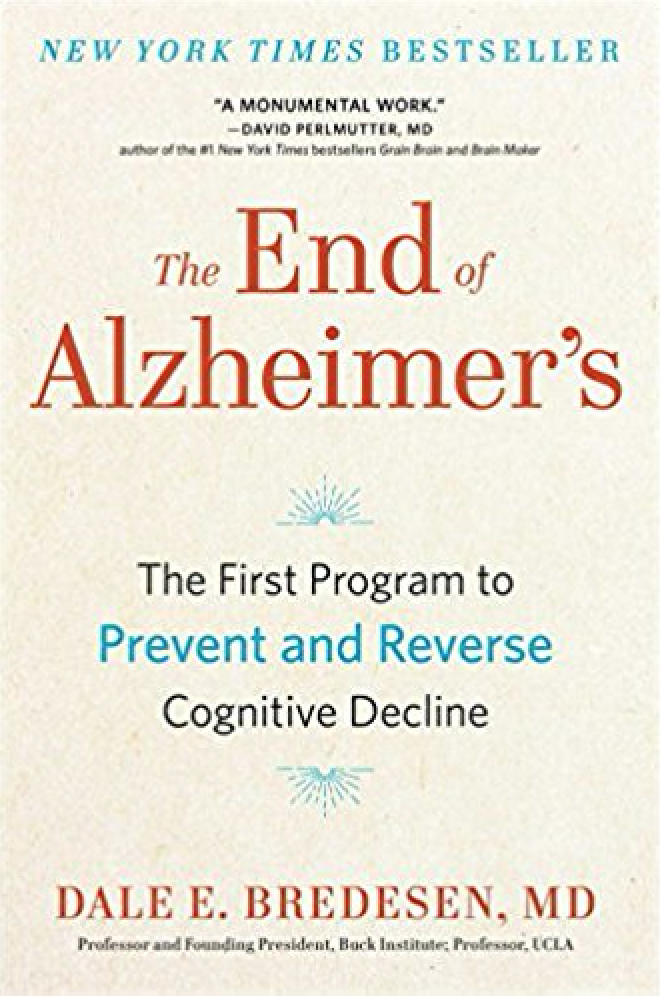
Dr. Bredesen is the author of the New York Times bestseller The End of Alzheimer’s, and the founding CEO of the Buck Institute. He also led the only research study to show actual reversal of cognitive decline in Alzheimer’s patients.Tomorrow around 7 PM Eastern, Peggy will join Dr. Bredesen on his Facebook page for an update regarding his research.The interview will be on Facebook’s Live platform – given the nature of the event, the direct link won’t be available until shortly before the interview begins.However, you can follow Dr. Bredesen’s Facebook page here for details of the interview and mark your calendars for around 7 PM Eastern time!https://www.facebook.com/drdalebredesen”